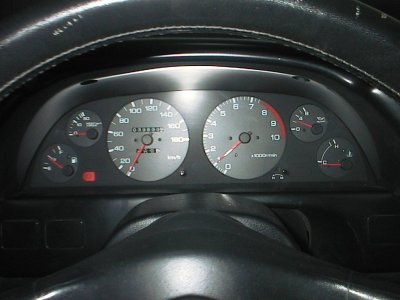
So I finally got a call from Mine's Takayanagi-san to update me on my car.
Here is what he told me that they've found so far:
Apparently, they found most of the water in the cooling system, gone! So they suspect a broken hose somewhere. No visible damage anywhere, so likely they will have to lift up the car and/or remove the engine to be sure.
Luckily, I only drove for about 10 minutes once I saw the smoke so there is unlikely to be any damage due to overheating, however Nakayama-san will be inspecting the head of the engine to make sure there is no damage. (keeping fingers crossed, that sounds expensive!!!)
If the leak was from a hose somewhere, it would have happened very rapidly, as I don't recall seeing a puddle of coolant in my garage area. So it would have happened that day when I drove to Yokosuka.
Additionally, they found that the water that remained, was rusty. This is probably my fault, I can't recall the last time I had the coolant changed - I thought it was a couple of years ago - and I've never had any cooling issues. Takayanagi-san doesn't believe I need a new radiator, but it (and the whole system) will simply need to be flushed out thoroughly.
By the way, I've circled where I saw the smoke/steam coming from:
In any case, I will let them first diagnose exactly where the leak is coming from, but assuming that it is a hose that gave way, I think I will have to replace some of those hoses back there with something stronger. Steel braided looks nice, but my understanding is that silicon hoses are just as strong and reliable (so long as you use the proper clamps) and steel braided's drawback is that the braiding prevent you from finding the source of a leak quickly. People's thoughts on this? If I do silicon, what color? Blue or black? (note I already have the Samco set for the radiator, in blue).
Stay tuned....
Monday, October 27, 2014
Wednesday, October 22, 2014
Back To Where It All Began...
So this past Sunday afternoon, I was driving around Yokosuka (where the US Naval Base is), when all of a sudden I heard something weird: like a fluid hitting something hot, repeatedly. It sounded like this: "pshh pshh pshh pshh."
I first thought something had gotten caught in one of the brake calipers, but then I began to see some white smoke. Still the optimist, I kept going, and headed onto the expressway.
However, entering a toll booth, it just seemed like there was a BIT too much smoke. Also, the idle speed was too high - like at about 2000 rpms. Did not sound normal at all. So I finally pulled over, popped the hood, and tried to locate the source of the smoke.
It seemed to be coming from the back of the engine area, on the side opposite of the turbos, down near or on the firewall. And of course everything was too hot back there to touch, and further, it was getting dark... quickly. In any case, having spent a good amount of money on the engine, I wasn't going to press on and risk damage.
So I called roadside service (JAF - Japan Automobile Federation) and they dispatched a flatbed to pick me up. JAF is great - only 3000 yen per year, and they offer numerous services. When they tow or haul/flatbed your car, they do so anywhere within 15km for free! In any case, the operator (who didn't know much about cars) was going to send over the first available tow truck... but then this flatbed showed up.
The JAF driver told me, as soon as they heard "Skyline GT-R" over the radio all the local drivers knew it had to be a flatbed. So this driver who was nearby volunteered to come over. It turns out that there are two types of flatbed - the ones that extend the entire platform to the ground, and those that slant. Obviously, your car has to be drivable to use the slant one (they can winch it up, but because my car is so low, that would be tricky).
| View from the driver's seat as I drive up the ramp |
commented on how good the car sounded, asking me "hey is this a Nismo tuned engine?" When I told him it was a Mine's engine, he got excited and asked me more questions, even though I was busy at the time listening to the JAF driver as he directed me to drive up the ramp slowly, one meter at a time as he used wooden blocks to make sure my car's front lip spoiler didn't scrape! Sheesh.
Mine's is also in Yokosuka, and was the closest tuning shop (I had called ahead to request they stay open late for me). So once the car was safely strapped down, off we went. We arrived exactly 15.1 km later:
| Arrival at Mine's. |
| Nakayama-san moves to open the garage door for my car |
| Takayanagi-san pulls my car into the garage of one of the world's most awesome GT-R shops. |
| On the left, the Mine's R34 GT-R. On the right, a Stagea RS260! 3 world class RBs lined up? |
| Two GT-R Legends? (only in my mind, LOL) |
So now, all I have to do is wait to find out what they diagnose is the problem with my car. Going back to the beginning of this blog, Mine's did the new engine install back in late summer of 2007, so it's been just about 7 years. During that time, I've had a leaking water line, and then a few months later, had the turbo oil lines break, (twice!) spewing hot oil all over the place - the smoke this time was not black, was coming from the other side/rear of the engine, and there was no oil residue so I'm optimistic that it doesn't involve these oil lines.
This time, I'm hoping that it's nothing serious, in which case, I will ask that expendable items in the engine bay be upgraded to the extent possible. IF the engine has to come out, however, then maybe it's time for a few "optional extras" to be installed?? Any suggestions?
Stay tuned!
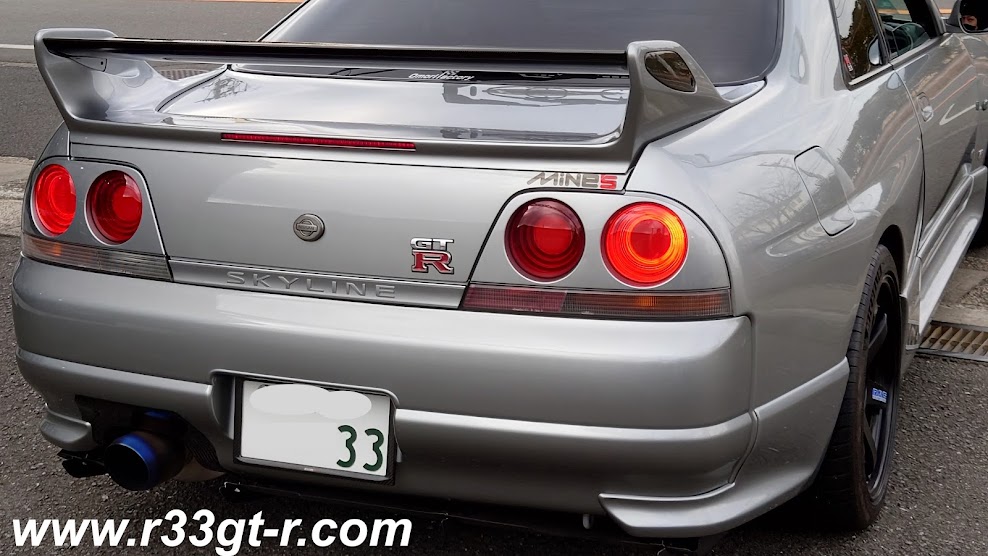
This time, I'm hoping that it's nothing serious, in which case, I will ask that expendable items in the engine bay be upgraded to the extent possible. IF the engine has to come out, however, then maybe it's time for a few "optional extras" to be installed?? Any suggestions?
Stay tuned!
Tuesday, October 21, 2014
How the R33 GT-R Improved Upon the R32 GT-R (Part 2 - Engine, ATTESA ETS-PRO, and Super HICAS)
Continuing from the previous post - (How the R33 GT-R Improved Upon the R32 GT-R (Part 1 - Aerodynamics and the High Traction Layout), the following items seem more mundane and evolutionary, versus revolutionary.
Also, these are areas that have been widely discussed in the English press and so the big improvements may not be new to you - however, I still discovered items of interest, as described below.
First, however, this video - this was a promotional VHS video sent to Nissan dealerships upon the launch of the R33 GT-R, to be shown to prospective customers - it's Nissan's explanation as to how the R33 had improved on the R32 (yes it's all in Japanese, but the visuals... and engine noise... and the amazing acrobatics while being driven hard at Nurburgring (at about 8:50 onwards) are worth it!):
Also, these are areas that have been widely discussed in the English press and so the big improvements may not be new to you - however, I still discovered items of interest, as described below.
First, however, this video - this was a promotional VHS video sent to Nissan dealerships upon the launch of the R33 GT-R, to be shown to prospective customers - it's Nissan's explanation as to how the R33 had improved on the R32 (yes it's all in Japanese, but the visuals... and engine noise... and the amazing acrobatics while being driven hard at Nurburgring (at about 8:50 onwards) are worth it!):
Not surprisingly, the video describes or mentions, in addition to the items in this post, most of the items I wrote about, not just in the previous post but also much of what appeared in the design trivia posts (Part 1, Part 2, Part 3).
Engine:
Basically the same, except boost was raised in response to Nissan test drivers who wanted more torque and response. This resulted in 1.5 kgm more torque (to 37.5kgm) and more horsepower, although due to the gentleman’s agreement, power continued to be listed as “280ps.” Engine management (and thus response) was improved as the engine ECU was changed from 8 bits to 16 bits for more detailed engine control, response and reliability.
Side note: Something that Nissan did not publish, however, is the claim that the standard R33 GT-R RB26 blocks are actually more rigid than the R32 ones, due to slight changes in the block design (i.e. improving the ribs in the block). [Note: Even though this is published in my sources, I have never heard this claim before. I would take with a grain of salt.]
Basically the same, except boost was raised in response to Nissan test drivers who wanted more torque and response. This resulted in 1.5 kgm more torque (to 37.5kgm) and more horsepower, although due to the gentleman’s agreement, power continued to be listed as “280ps.” Engine management (and thus response) was improved as the engine ECU was changed from 8 bits to 16 bits for more detailed engine control, response and reliability.
Side note: Something that Nissan did not publish, however, is the claim that the standard R33 GT-R RB26 blocks are actually more rigid than the R32 ones, due to slight changes in the block design (i.e. improving the ribs in the block). [Note: Even though this is published in my sources, I have never heard this claim before. I would take with a grain of salt.]
Drivetrain: ATTESA ETS-PRO
With the BNR32, in addition to high speed corners being tricky as the car generated lots of understeer, there were also times where traction was not satisfactory. So the goal with the BCNR33 was to have it behave exactly as you wanted it to.
Yes, everyone knows by now that the R33 GT-R V-Spec model came with the electronically controlled Active LSD, while the standard BCNR33 did not. This leads many to believe that the standard R33 GT-R uses the same ATTESA system as the R32 GT-R… which is true for the hardware, but NOT the software.
Hiroki Sasaki, in charge of ATTESA-ETS in Nissan’s Chassis department, explains that the problem with the R32 was that it understeered badly, it simply would not turn. They researched the issues, and ended up changing (the software on) how the torque split is done. As a result, the R33's handling is more precise. The R33's ATTESA ECU is able to take into account more road and speed conditions, using higher capacity (higher limits) sensors, to better tune the car's response in light of the driving conditions and compatibility with the tires.
For the ETS-PRO, they initially borrowed
the Active LSD that was already being used in the standard (2wd) R33 in a quest to maximize real wheel traction. However,
initial testing did not go well, so the engineers spent a lot of time
experimenting. They finally got it to work well, but this also was due to improving body rigidity and tire performance, finally better.
Here are a few photos of the active rear diff - note that it has the finned cover, which the standard differential does not.
The end result is, ETS functions in both R33 GT-Rs to make the car much more FR-like than the R32. And, with the ETS-PRO, the active LSD allowed Nissan engineers to say the the V-spec is “the GT-R we really wanted to build, with superlative performance.”
Brakes: all cars, both V-Spec and Standard trim, came with the Brembo brakes that made their debut on the R32 GT-R V-Spec models. I occasionally hear about the odd R33 GT-R that doesn't have Brembos on it... unfortunately, those were stripped of the Brembos before being sold to the unsuspecting new owner.
Super HICAS: The R33 adopted the electrically driven Super HICAS versus the R32’s more primitive Super HICAS which was hydraulically driven, heavier, not as precise and did not utilize a yaw sensor. See my technical note about this from an earlier post. HICAS appears to be a touchy subject - many people claim that "HICAS kicked in" to explain why they lost control of their GT-R. I believe this is the result of people not understanding how HICAS works, and not understanding what else could cause handling issues - HICAS is an easy culprit to blame, especially given the number of hydraulic HICAS equipped R32s, the fact that many tuners sell lock out bars, and the apparent complexity of the mechanism itself. I'm doing research on this issue, and I hope to be doing a future post on this topic, soon.
Putting it All Together: Along with a more responsive intercooler, all of the changes mentioned above and from the previous post resulted in a car that Nissan engineers claimed was more responsive and faster than the R32 GT-R, as demonstrated by the significantly faster performance at Nurburgring (in Japan, the advertising copy was “Romance of minus 21 seconds”).
Here is the "romance of minus 21 seconds" commercial:
Hiroyoshi Kato, Nissan's main test driver, explained that (due to all the technical improvements, especially the ones mentioned on this page) "the R33's performance completely surpasses the R32s... the first we went to Nur (with the R32), the Nissan team was completely intimidated with how Porsche was testing, but by the time we had the R33, in our hearts we believed we could kick Porsche's ass." (Quote from "Nissan Skyline GT-R R33/R34, Neko Mook 1377")
By the way - here is Nissan's official profile (in English) of Kato-san: Nissan Legends - The Man Who Found His Calling -Hiroyoshi Kato.
Next - time for some mods for my car (finally)!
Putting it All Together: Along with a more responsive intercooler, all of the changes mentioned above and from the previous post resulted in a car that Nissan engineers claimed was more responsive and faster than the R32 GT-R, as demonstrated by the significantly faster performance at Nurburgring (in Japan, the advertising copy was “Romance of minus 21 seconds”).
Here is the "romance of minus 21 seconds" commercial:
By the way - here is Nissan's official profile (in English) of Kato-san: Nissan Legends - The Man Who Found His Calling -Hiroyoshi Kato.
Next - time for some mods for my car (finally)!
Monday, October 6, 2014
How The R33 GT-R Improved Upon The R32 GT-R (Part 1 - Exterior Design/Aerodynamics & the "High Traction Layout")
So although I've previously explored the differences between the R33 and R34 GT-Rs, and discovered that while the running gear basically stayed the same, with improvements to body rigidity and aerodynamics (as well as styling, of course) being the main differences, I hadn't yet really looked into the differences and improvements between the R32 and the R33 GT-Rs.
Nissan had a problem - the R32 GT-R was spectacularly successful - and its successor the R33 was bound to be in its shadow unless it was substantially better both subjectively and objectively. While R33 haters may not like to admit it, the R33 GT-R is a technically much improved car over the R32 GT-R - so much so, if you recall the objective when designing the R34 GT-R, Nissan's goals were not to make it any faster than the R33 (it was deemed fast enough), but rather, just easier to drive for the average driver.
In any case, with all the information I found, I've split the discussion into two parts - this post, Part 1, which examines the improvements in the exterior (design and aerodynamics) and the "High Traction Layout" (balance and body rigidity), and the next post, Part 2, which examines the Engine, ATTESA ETS PRO, and Super HICAS.
Exterior Design and Aerodynamics:
When development of the R33 (the general model, NOT the GT-R) began, it was initially conceived that the 2 door coupe would ride on a shorter wheelbase than the 4 door sedan. The coupe was to have a shorter hood as well (further, no turbo model was contemplated). This all changed, however, when Nissan decided to put the coupe on the same wheelbase as the sedan.
We all know that the R32 GT-R excelled in the Group A racing series in Japan. However, the R33 GT-R was facing a different race series (N1 Taikyu), this one which required sustained speeds exceeding 250kph; this requires not just awesome acceleration but stable braking prowess as well. Thus, Nissan decided to put heavy emphasis on aerodynamics during the design; and not just better aerodynamics, but balanced aerodynamics.
The R32 was developed with the “Zero Lift” concept in mind, hence it sported a large rear spoiler to help keep the car on the ground and provide stability in high speed cornering. However, its coefficient of drag was 0.40, which was not something to brag about even back then. Further, based on racing experience Nissan wanted the R33 GT-R to have superlative cooling and anti heat abilities, which would require large openings for the radiator and oil cooler. The front spoiler would have to be a shape which would reduce front lift as well.
Nissan called the design theme for the R33 GT-R, "Sophisticated Strength" - while engineers wanted superior aerodynamics, cooling ability, and a wider tread, the designers wanted a design that suggested speed and power.
Here are some quotes on various design aspects from the chief of the GT-R’s exterior design, Hidetoshi Nishiizumi: (Source: Cartop Mook: R33 Skyline GT-R Best Album) (all Nissan Gallery photos from Wikipedia)
“The size and height of the rear spoiler of the R32 GT-R were designed with Group A racing in mind. The regulations meant the wing could not be adjustable, so we put a big one on from the beginning. The R33 GT-R had an adjustable one. From the rear, you can see that it actually has a “Y” shape design. Mizuno-san was heavily involved in the design. Although it extends a total of 30mm on the sides, the size of the spoiler is limited. We did experiment with a spoiler that would fit within the width of the trunk lid, but it looked unbalanced. This is what lead to the current design with its overhang.”
Nissan called the design theme for the R33 GT-R, "Sophisticated Strength" - while engineers wanted superior aerodynamics, cooling ability, and a wider tread, the designers wanted a design that suggested speed and power.
Here are some quotes on various design aspects from the chief of the GT-R’s exterior design, Hidetoshi Nishiizumi: (Source: Cartop Mook: R33 Skyline GT-R Best Album) (all Nissan Gallery photos from Wikipedia)
"The R32 had excessive front lift. At Fuji Speedway, taking the high speed 130R corner at speed was scary, according to Kaz Mizuno (later father of the R35 GT-R). So efforts were made in the R33 to minimize front lift - and in that regard, the longer front overhang worked in our favor."
"We designed large openings in the front bumper, and made the shape spoiler-like. We experimented with various angles for the lip spoiler as well, to get the best wake separation for the air.”
“The size and height of the rear spoiler of the R32 GT-R were designed with Group A racing in mind. The regulations meant the wing could not be adjustable, so we put a big one on from the beginning. The R33 GT-R had an adjustable one. From the rear, you can see that it actually has a “Y” shape design. Mizuno-san was heavily involved in the design. Although it extends a total of 30mm on the sides, the size of the spoiler is limited. We did experiment with a spoiler that would fit within the width of the trunk lid, but it looked unbalanced. This is what lead to the current design with its overhang.”
“Compared to the R32 GT-R, what really gives the 33 remarkable presence is the larger spoiler on the back. From the back, it really enhances its presence. The reason we included an adjusting tool in the tool kit was so that the wing could be adjusted for track days – but in town, it looks best at horizontal.”
“We experimented with making the entire wing adjustable, but in the end settled only on angle adjustability and the caps on the sides, for weight purposes. Also the reason why the rear is solid, but the front of the blade is adjustable, is just in case it became separated, it would move in the direction of generating downforce, allowing the driver to stop safely.”
The design was in a state of change until right before the car went on sale. You can see that the production car looks far more aggressive than the the prototype:
“Compared to the prototype, we widened the lower half of the body to give the appearance of a lower center of gravity.”
![]() |
| The R33 GT-R Proto - I'm not sure I see the narrower lower belt line? Photo from http://www.gtr-world.com |
![]() |
| You can see the solid, fixed position rear wing which has evolved from the Type M wing but is still not adjustable Photo from http://www.gtr-world.com |
![]() |
| The R33 GT-R could have had this rear spoiler design. Courtesy: http://asteriskblog.blog90.fc2.com/blog-entry-39.html |
![]() |
| GT-R could have looked like this, with the roof spoiler! From: http://infinitefocusphoto.wordpress.com/2011/12/19/hangs-muskis/ |
There was extensive wind tunnel and road testing of the design, with efforts made to obtain the best front-back lift balance while allowing for wide tires, blister fenders and rear spoiler. In the end the Cd equaled 0.35 (beating the R32's 0.40), and the front /rear downforce was better balanced, with a front coefficient of lift of 0.09, and a rear downforce of 0.03 (with the spoiler at the flat position). Even with the bigger body.
The "High Traction Layout":
In addition to the aerodynamics, the High Traction Layout improved the dynamic performance of the chassis. This is Nissan's terminology for the technical chassis design differences which were designed to improve the performance of the R33 GT-R over the R32. In addition to the improved aerodynamics, the High Traction Layout improved the dynamic performance of the chassis. It did this by improvements in two areas: body rigidity and weight distribution.
Body Rigidity:
With the addition of front and rear strut tower bars, as well as adding cross bars under the floor in over 30 locations, rigidity was improved – 40% increase compared to the R33 GTS, and over 150% (1.5 times) more rigid than the R32. The improvements include, front tower bar, front cross bar (which connects the sides of the transmission tunnel), floor cross bar, the seat back center (the plate behind the rear seats), rear strut bar, etc.
![]() |
| From: "All About the New Skyline GT-R" |
Four wheel multi-link suspension: The front layout was changed. The R32’s weak point was the use of an “I” shaped upper arm, which was susceptible to rattles. These were changed to “A” arms, which gave 90% more lateral rigidity.
In the rear, Nissan added the “triple cross bar” – which adds more rigidity for the suspension members (in the R34, it also provided a nice place to hang the rear carbon diffuser off of… the 33 and 34 triple cross bar is the same, incidentally).
Having increased body rigidity means, of course, that power not only gets to the ground more directly, but the suspension behaves more accurately. To the driver, this makes the car feel more nimble and agile, with more direct feel, and thus easier to drive.
Weight Distribution:
The Problem: The R32 GT-R was criticized as being too front heavy, which lead to strong understeer. Additionally, the fuel tank was placed below the trunk floor, meaning that there was weight overhang in the rear as well. Not only was the weight BEHIND the rear wheels an issue, but as fuel was consumed and the rear got lighter, there was an obvious effect on the car’s performance. Combined with a less rigid body, the R32's potential was wasted.
The Solution: With the increased wheelbase, it was now possible to improve weight distribution; the plastic fuel tank was placed below the rear seats, battery moved to the trunk, and to the extent possible, heavy things were moved towards the center of the car. The front and rear overhang weights were lightened.
But improving the weight distribution wasn't just about moving things around between the wheels - it also means reducing weight in critical areas to improve the balance of the car. The increased body rigidity didn't help - the added bracing added to the car's weight, which meant that Nissan engineers had two compelling reasons to try to figure out ways to lighten the car.
Up front, to reduce front overhang weight, the front hood and fenders were made of aluminum (as in the BNR32), the headlights were made of lightweight plastic and the intercooler was lightened, in order to lighten the front overhang, reducing inertia. The intercoolers were changed from extruded multi hole tube to inner fin type which improved response, cooled 4% better, and was 400g lighter.
![]() |
| From: "All About the New Skyline GT-R" |
Up front, to reduce front overhang weight, the front hood and fenders were made of aluminum (as in the BNR32), the headlights were made of lightweight plastic and the intercooler was lightened, in order to lighten the front overhang, reducing inertia. The intercoolers were changed from extruded multi hole tube to inner fin type which improved response, cooled 4% better, and was 400g lighter.
Nissan engineers also found other ways to reduce weight, even by a few grams.
This includes:
Hollowing out the side door beams.
Using high tensile steel on body panels.
Reduction in sound deadening materials.
Super HICAS becoming electric.
Hollowing out of rear stabilizer bar.
Use of high tensile springs front and rear.
Shrinking the ABS actuator.
Light aluminum wheels with higher rigidity
The front and rear axles were made of aluminum (as in the BNR32) but also so were engine mount insulators and brackets
New plastics were used for : fuel tank, head lamps, super high strength "PP" bumpers, air cleaner, changing the headlining material, changing material of rear spoiler.
So even though the R33 was heavier by 100kg, the records show that it was 30kg heavier up front, and 70 kg heavier in the rear.
There were a few drawbacks to the High Traction Layout, however - although these were deemed worthy sacrifices to get better performance:
1) With the battery moved to the back, as well as the rear strut bar, trunk space and volume is smaller on the R33 vs the R32.
2) Additionally, the fuel tank shrank from 72 liters to 65 liters… resulting in a lower range.
1) With the battery moved to the back, as well as the rear strut bar, trunk space and volume is smaller on the R33 vs the R32.
2) Additionally, the fuel tank shrank from 72 liters to 65 liters… resulting in a lower range.
In any case, I think they did a great job on both the looks, aero and chassis development. It is ironic that people criticize the longer wheelbase without understanding how Nissan engineers actually used that to the car's advantage from a dynamic technical standpoint - the longer wheel base is not just stability at speed in a straight line, but also with the High Traction Layout in corners too!
Next: Engine, ATTESA E-TS PRO, and SUPER HICAS
Sources:
1) Cartop Mook: R33 Skyline GT-R Best Album
2) Neko Mook: I Love R33 Skyline GT-R
3) Motorfan: 新型スカイラインGT-Rのすべて("All About the new Skyline GT-R")
Sources:
1) Cartop Mook: R33 Skyline GT-R Best Album
2) Neko Mook: I Love R33 Skyline GT-R
3) Motorfan: 新型スカイラインGT-Rのすべて("All About the new Skyline GT-R")
Labels:
aero,
aerodynamics,
BNR32. BCNR33. BNR34,
History,
Nissan,
Skyline,
Technical
Monday, August 11, 2014
R33 GT-R Design Trivia (Part 3 - Wheels and Tires)
Wheels:
It's common knowledge that BBS Japan made the forged aluminum alloy wheels for R32, R33 and R34 GT-Rs. What is not as well known is that, in fact, the R33 GT-R wheels were based on the look of the R32 wheels – instead of 5 solid spokes, there are 5 hollowed out spokes (so they appear to be 10 spokes).
![]() |
| R32 GT-R wheel. From: http://www.e-polish.info/sagyou-R32.html |
![]() |
| A lovely Midnight Purple car with the OEM wheels. Courtesy of Christopher Ziolkowski |
In the beginning, there were two candidates for wheels – a refined/evolved version of the R32, or a new 5 spoke design. They wanted to go with the first design, but quickly realized that in a 17 inch rim size, the wheel got heavier, which is how they came up with the 2 rib per spoke design.
At the time, the 2 rib wheels were rare, so appropriate for the GT-R. The wheels were also designed to improve the cooling characteristic of the wheel, so that owners could go to the track using the OEM wheels.
There was also a candidate design of 5 flat spokes (like the Ferraris back then), but the dished look won out, to give a sense of fullness and strength.
The R32 wheels, by the way, were inspired by F1 wheels, and their design was done so that the calipers would be visible from above. Same theme with the R33.
So what is the difference between the Bridgestone Expedia S-07 tires that came on the V-Spec, vs the Bridgestone RE010s that came on the standard BCNR33?
Both were specifically designed for the GT-R, and we would expect to be the S-07 to be higher performance tire... which is true to an extent.
It turns out that the RE010s were better all around tires, while the S-07 were better in the dry but not so good in the wet. Most interesting however is that the S-07’s design minimized tire noise (to those on the outside, due to new noise regulations for cars passing in 1998.)
For the UK spec R33 GT-Rs, it's not surprising they were fitted with the RE010s due to their all weather characteristics.
Next post - How the R33 GT-R improved upon the R32 GT-R, Part 1 (High Traction Layout, Aerodynamics)
Both were specifically designed for the GT-R, and we would expect to be the S-07 to be higher performance tire... which is true to an extent.
![]() |
| Bridgestone S-07 From: http://www.croooober.com/item/1876796 |
![]() |
| RE010 From: http://minkara.carview.co.jp/en/userid/167168/car/143531/2987993/parts.aspx |
It turns out that the RE010s were better all around tires, while the S-07 were better in the dry but not so good in the wet. Most interesting however is that the S-07’s design minimized tire noise (to those on the outside, due to new noise regulations for cars passing in 1998.)
For the UK spec R33 GT-Rs, it's not surprising they were fitted with the RE010s due to their all weather characteristics.
Next post - How the R33 GT-R improved upon the R32 GT-R, Part 1 (High Traction Layout, Aerodynamics)
Labels:
BNR32. BCNR33. BNR34,
History,
Nissan,
Parts,
R33 GT-R
Monday, August 4, 2014
R33 GT-R Design Trivia (Part 2 - Emblem, Steering Wheel and Gauges)
Continuing on the theme of interesting stuff I found out when researching how the R33 GT-R improved upon the R32 GT-R:
The Emblem:
The Emblem:
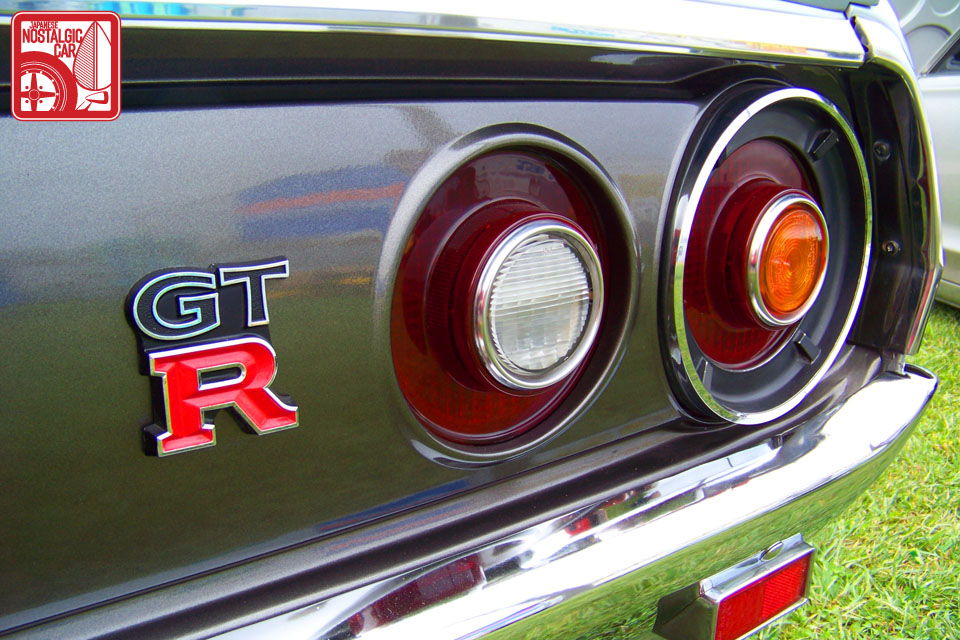
Nissan’s design division has one division that specializes only in emblems. For the RB26 GT-Rs, the GT-R logo used on the Ken Mary GT-R that debuted in Jan 1973 was the inspiration. That is, “GT” on top, a larger “R” on the bottom, and the “R” letter actually being silver outlined with red being painted within the outlines, to give it more presence.
![]() |
| From: http://japanesenostalgiccar.com/2011/09/13/events-2011-japanese-classic-car-show-part-01/ |
It turns out that at the time of the R32, the general design trend was to minimize badging or make them smaller, in order to give a clean look to the front of the car. Thus, the GT-R, like all R32s, only had the “S” symbol on the front hood, and only had the GT-R badge on the trunk.
However, the R33’s development chief Kozo Watanabe (who would later be in the same role for the BNR34), insisted on having a largish GT-R logo in the front as well, in order to strongly emphasize the car was a GT-R. This was in order to let cars ahead, when looking in the mirror, see that a GT-R was closing in from behind!
Nissan's chief designer of the exterior of the GT-R, Hiroshi Nishiizumi, had this to say about the GT-R logo:
“The large GT-R emblem is in the middle of the grill because there is only ‘dead space’ - the hood latch - behind it, so it hides this part which we don’t want to see. Also, the GT-R lettering is two level, just like the GT-R logo for the Ken /Mary GT-R.”
There is also a “GT-R” that is inscribed only on the left cover to the rear spoiler. Ever wonder why it’s only on one side?
This was done so that a driver being PASSED by a GT-R (in the fast lane in right hand drive countries,) would see at eye level, at the moment of being passed, what car had just passed him!
The logo designer was Ms. Junko Ito, who said her marching orders were to come up with an elegant and sporty design, larger than the 32 design on which it was based to reflect the larger mass of the 33, and fit it al into a square, while remaining well balanced. The "R" was made larger than the "GT", and there was a black background to the letters. Further the red used was more crimson than the brownish red used in the 32.
![]() |
| So this is the view in the mirror as a lesser car is about to be passed. From: http://www.skylinesaustralia.com/forums/topic/237956-in-motion-pics-of-my-r33-gtr/ |
“The large GT-R emblem is in the middle of the grill because there is only ‘dead space’ - the hood latch - behind it, so it hides this part which we don’t want to see. Also, the GT-R lettering is two level, just like the GT-R logo for the Ken /Mary GT-R.”
There is also a “GT-R” that is inscribed only on the left cover to the rear spoiler. Ever wonder why it’s only on one side?
![]() |
| From: http://www.driftireland.com/forum/showthread.php?36087-Genuine-R33-GTR-Spoiler |
The logo designer was Ms. Junko Ito, who said her marching orders were to come up with an elegant and sporty design, larger than the 32 design on which it was based to reflect the larger mass of the 33, and fit it al into a square, while remaining well balanced. The "R" was made larger than the "GT", and there was a black background to the letters. Further the red used was more crimson than the brownish red used in the 32.
The Steering Wheel:
This is one area where I think the R32 is better - its steering wheel, which was inspired by Porsche and BMW designs. The objective here was being able to turn the wheel by sliding your fingers. It is simple, clean and functional:
We all know that by the time of the R33, airbags were becoming mandatory. Hence the Series 1 BCNR33 had that monstrosity of a steering wheel taken from the Nissan parts bin. It did not even have the sporty red stitching found on the more compact steering wheel found on the Series 2 and 3:
![]() |
| From: http://jp.autoblog.com/2013/03/03/nostalgic-2days-2481km-r32-skyline-gt-r/ |
I guess it could have been worse? The R33 GT-R Prototype's steering wheel:
![]() |
| Actually, this looks better - at least smaller - than the Series 1 one. All three photos above from: http://www.gtr-world.com/ |
What is NOT known is that it turns out the second steering wheel (for Series 2 and 3) was actually finished as a product and ready to go by the launch of the R33, but for parts sharing purposes, the decision was made to use the older one that ended up in the Series 1.
So, apologies to Series 1 owners, looks like you guys got stuck with some of the cost cutting going on at the time...
The Gauges:
When designing the R33 GT-R, Nissan designers followed the theme of "road going racer" - so racing drivers as well as Nissan test drivers were asked for the input in designing the interior. One trait as a result was the large number of gauges.
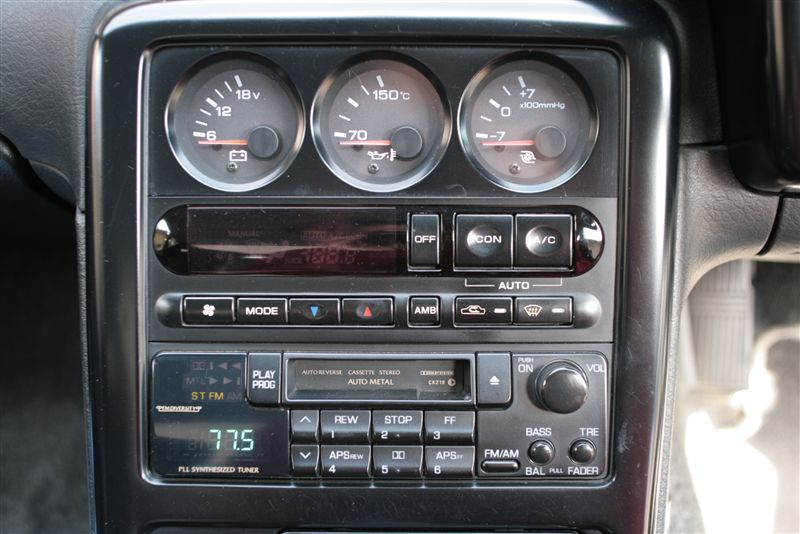
The sub meters were carried over, but improved upon the ones in the R32. On the R32, the gauges were pointed at the driver, but on the R33, in addition to having larger and more readable font, the fascia was cut to allow easy visibility without having to offset the gauges.
As for the main gauges, one small detail is the use of the imprinted carbon which in addition to the GT-R logo in the tachometer, was designed to separate the R33 GT-R from non GT-R variants.
Speaking of the tachometer - unlike in the R32, where the needles of both the speedometer and the tachometer were sitting, at rest, at the 7pm position (see photo above for the steering wheel) or the non GT-R R33, where the speedometer and tachometer needles both begin in the horizontal position - Why, in the R33 GT-R why does the speedometer needle point to 9pm but the tachometer needle point straight down? I've always wondered about this.
The problem with gauges with needles in the horizontal position (as was found in non GT-R R33 variants) is that the area where the rev limiter would kicks in (at 8000 rpm) is towards the bottom:
For the R33 GT-R designers, functionality was the most important aspect. But they also wanted an emotional connection with the engine as well: they wanted the driver to get excited watching the needle go up and down along with the engine revs. In other words, the designers wanted the tachometer to have a natural, wide angle of sweep, so the needle would rise from zero at maximum bottom below and peak near the red zone at the very top. Also, more practically, when driving at high speed, by having 7000rpm at the top center, it was easy to see at a glance that you were approaching the 8000 rpm red zone.
The designers also did a couple other things to emphasize the importance of the tachometer. First, they eliminated the voltage gauge found in the R32, and replaced it with a warning light, and then moved the torque meter to the 3 sub meters in the center stack area. By eliminating the number of surrounding gauges from 4 to 3 (leaving only one on the tacho side), this made the tachometer appear larger and easier to see. Also - it turns out that the color of the font on the gauges is actually not white, but a light grey for better visibility.
Compare:
The sub meters were carried over, but improved upon the ones in the R32. On the R32, the gauges were pointed at the driver, but on the R33, in addition to having larger and more readable font, the fascia was cut to allow easy visibility without having to offset the gauges.
![]() |
| OEM R32 GT-R Sub Gauges |
![]() |
| From: http://www.gtr-world.com/gt-r/bcnr33/bcnr33-skyline-gtr-4door-autech.html |
And all the gauges are all ROUND. Actually, other parts of the interior are round too, including the clock, harzard, defogger and even the HVAC switches. This was done on purpose, to create a link to the afterburner tail lamps. As one designer stated, "The beautiful circle is the Skyline philosophy."
As for the main gauges, one small detail is the use of the imprinted carbon which in addition to the GT-R logo in the tachometer, was designed to separate the R33 GT-R from non GT-R variants.
Speaking of the tachometer - unlike in the R32, where the needles of both the speedometer and the tachometer were sitting, at rest, at the 7pm position (see photo above for the steering wheel) or the non GT-R R33, where the speedometer and tachometer needles both begin in the horizontal position - Why, in the R33 GT-R why does the speedometer needle point to 9pm but the tachometer needle point straight down? I've always wondered about this.
![]() |
| From: http://www.skyline-forum.de/showthread.php/10001-NISMO-R33-320kmh-11k-TACHO |
The problem with gauges with needles in the horizontal position (as was found in non GT-R R33 variants) is that the area where the rev limiter would kicks in (at 8000 rpm) is towards the bottom:
![]() |
| Yes, it has the carbon look, but this is a BCNR33 gauge panel installed in an ECR33. From: http://minkara.carview.co.jp/en/userid/660687/car/1417373/6174645/parts.aspx |
The designers also did a couple other things to emphasize the importance of the tachometer. First, they eliminated the voltage gauge found in the R32, and replaced it with a warning light, and then moved the torque meter to the 3 sub meters in the center stack area. By eliminating the number of surrounding gauges from 4 to 3 (leaving only one on the tacho side), this made the tachometer appear larger and easier to see. Also - it turns out that the color of the font on the gauges is actually not white, but a light grey for better visibility.
Compare:
![]() |
| From: http://www.skyliner32.net/HNR32/img/after.jpg |
OR:
Amazing the little details they thought about, eh?
![]() |
| From: http://minkara.carview.co.jp/en/userid/1558931/car/1155628/4692855/parts.aspx |
Amazing the little details they thought about, eh?
Next: R33 GT-R Design Triva, Part 3: Wheels and Tires.
Tuesday, July 29, 2014
R33 GT-R Design Trivia (Part 1 - Seats, Tail Lights and Headlights)
In doing research to discover how the R33 GT-R improved upon the R32 GT-R, I came across some interesting tidbits on the R33 - some items which even I had not thought about before, as well as some which had always bothered me. Before I post what I found on the improvements over the BNR32, I have three posts on BCNR33 design trivia.
Blue vs Red Interior Stitching:
I've always wondered why Nissan did this. Why was the Series 3 given the red stitching, but the Series 1 and 2 blue stitching? Notably, the seats also have red or blue inserts to reflect the rest of the interior.
It turns out that in the beginning, there WAS argument internally over the stitching color – either red or blue – but blue was finally decided upon as it was Nissan’s image color.
Remember this is how the old logo looked:
The "Speed King" commercial when the car was first introduced in 1995:
And then the Series 3 commercial in 1997:
Anyway, as everyone knows, the R33 seats are simply reupholstered R32 seats. A bit of history on the R32 seats. When designing the R32 seats, they had 2 goals - seats that could keep up with the GT-R’s performance, and seats ergonomically designed to fit well and allow for long drives without tiring.
Head and Tail Lamps:
Finally, what Shiraiwa wanted to do was to have an “S” mark inscribed in both the 32 and 33 headlights. (in the photo of the R30 headlamp below, you can see an “S” mark between the two lamps, at the top where the light doesn’t hit).
Blue vs Red Interior Stitching:
I've always wondered why Nissan did this. Why was the Series 3 given the red stitching, but the Series 1 and 2 blue stitching? Notably, the seats also have red or blue inserts to reflect the rest of the interior.
![]() |
| From a Series 1 car: courtesy http://www.gtr-world.net/gtr/archive/1858 |
![]() |
| Series 3 car |
Remember this is how the old logo looked:
The Series 3 cars did make the switch to red – but this was apparently because the main body color switched from midnight purple to silver (as can be seen in the TV commercials):
The "Speed King" commercial when the car was first introduced in 1995:
And then the Series 3 commercial in 1997:
Anyway, as everyone knows, the R33 seats are simply reupholstered R32 seats. A bit of history on the R32 seats. When designing the R32 seats, they had 2 goals - seats that could keep up with the GT-R’s performance, and seats ergonomically designed to fit well and allow for long drives without tiring.
So they looked and examined seats from Porsche, racing cars, rally cars, Recaro, and even seats with good reputations from other sports cars. But the most attention was paid to rally car seats. Most seats (at the time) really only supported the hips, but rally car seats support the hips, thighs, and shoulders, etc. in several locations. So the GT-R seat was based around a bucket seat design found in rally cars. Data on how the muscles move, blood flows were recorded and used. Initially, the seats held the shoulders more securely, but test drivers and journalists all reports this to be tiring in nature, so the shoulder areas were trimmed.
Also two different sizes were considered for larger and smaller drivers but eventually only one size was selected.
For the R33, different seats were again examined, including those from Group C cars, but they settled back on the R32 seats.
As for the seat material – initially the same stuff “exse-nu” (not sure of the spelling, as the name was in Japanese in the reference text) as on the R32 was considered, but a better material with better feel and finer fibers called Lux Suede was used. Although a NASA space material and real suede were also candidates, Lux Suede was selected in order to keep the seats as light as possible.
Incidentally, the rear seats of the R33 were designed in response to complaints that the rear seats in the R32 were too uncomfortable. (Both photos below courtesy of SkylinesAustralia.com)
![]() |
| R33 GT-R Rear Seats |
Head and Tail Lamps:
Nissan designers had to design the head and tail lamps within the parameters of two design
elements specific to the Skyline.
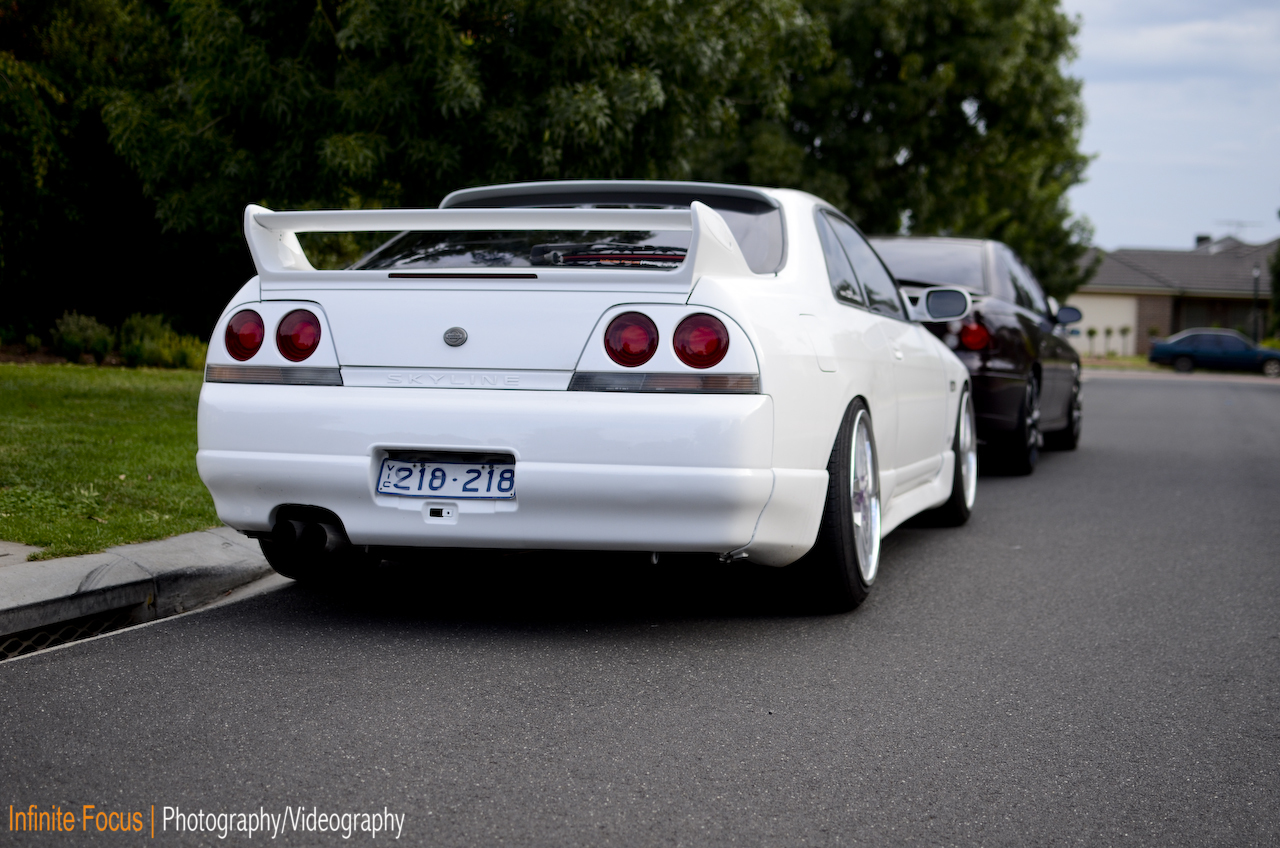
Everyone knows about the 4 rear afterburners (which in fact WERE inspired by the afterburners of jet fighters), but the designers also had
to follow the Skyline custom of having 4 head lights as well - apparently, every Skyline from the beginning had 4 lights up front, which is not true of all cars, for example Nissan's own Z cars did not.
![]() |
| AFTERBURNERS! |
![]() |
| "AFTERBURNERS" |
Speaking of the 4 tailights – it turns out that these rear
circular lights are actually not perfectly circular, but slightly oval. The reason for
this is that apparently, from afar, perfectly circular does not look circular (I've got to go out and measure them sometime!). Also, the designers also claim that the donut design is necessary to make
them look round as well.
The R33 GT-R headlights are different from the standard
R33. Naoto
Shiraiwa, who designed them, explains that the design was based on Group C cars, and further the image he wanted to have was two eyes
peering out from behind a visor shield of a racing helmet.
It also turns out that light manufacturers wanted Nissan
to use projector headlamps (like in the 32), but these required more depth than halogen lamps and
further initially these lights were large and their use gave a disjointed look.
![]() |
| From: http://www.lacar.com/?p=9538 |
Incidentally, the R33 GT-R’s outer lens actually has vertical lines
inscribed – this is so that if viewed from the side, the lens (apparently) gives a glitter
effect! What was also important from a design perspective was to
make sure that these headlights actually looked like lights – looking securely
forward.
The headlights on the 33 GT-R are actually 20mm forwards
that of the standard R33. This was
because it was not possible to keep inside the hood area.
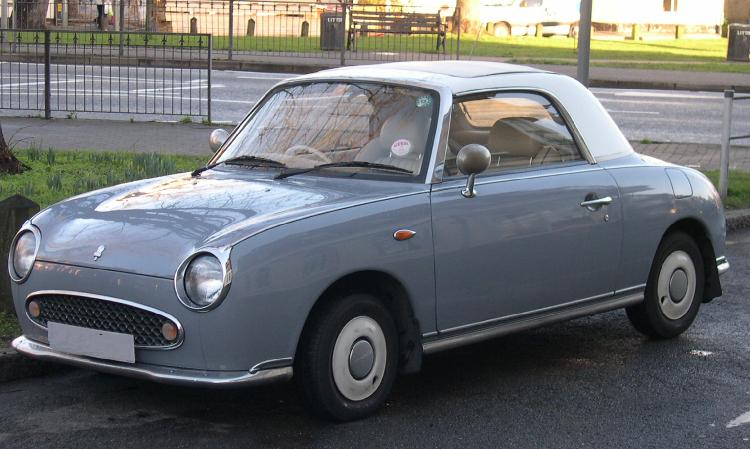
The front round turn signals were borrowed from the Nissan Figaro, although
the color is amber to make distinctive. These lights were also later used in some 180SX models as well.
![]() |
| The Nissan Figaro. The resemblance is uncanny (not!) |
![]() |
| from http://www.sillbeer.com/blog/entry/sweet-nissan-180sx-type-x-on-yahoo-japan-auctions/ |
Finally, what Shiraiwa wanted to do was to have an “S” mark inscribed in both the 32 and 33 headlights. (in the photo of the R30 headlamp below, you can see an “S” mark between the two lamps, at the top where the light doesn’t hit).
Next in R33 GT-R Design Trivia, Part 2: Emblem, Steering Wheel and Gauges
Labels:
GT-R R33,
Headlights,
History,
interior mods,
Parts,
Xenons
Subscribe to:
Posts (Atom)