Tuesday, June 23, 2009

Picked up my car today...

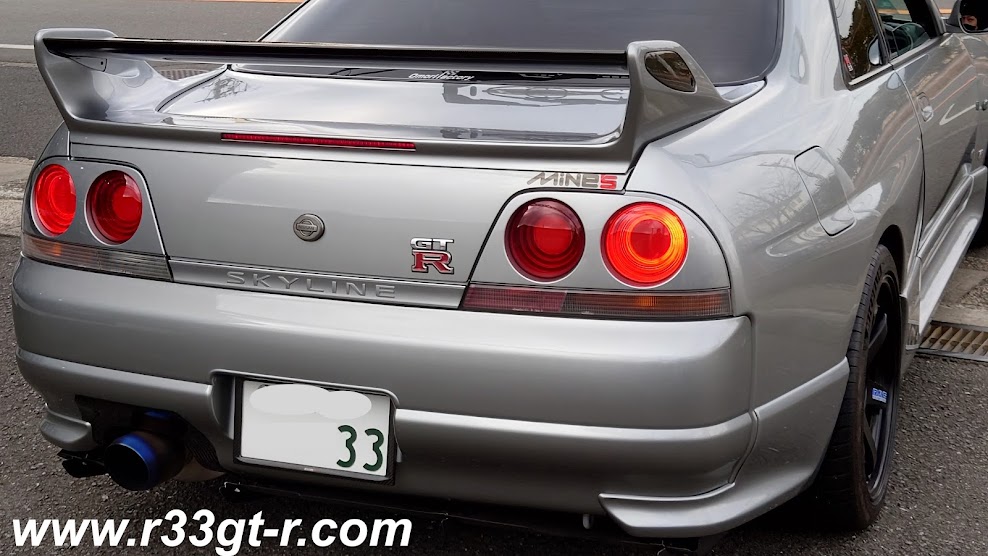
Right after I installed my hard pipes, on the WAY HOME, I discovered yet ANOTHER oil leak. I took it to the Nissan dealership the next day (Monday), only to discover that yet again, it was another oil leak from the rear turbo.

So - apparently the Mine's turbo elbow does not have the connecting bits to connect to the bracket that is on the standard parts. So, without any securing, the parts vibrate, eventually putting too much stress on the joint, which eventually cracks.

The guys at Prince Tokyo Shinagawa decided (after I asked them to look into it!) that braided steel lines would be the best way to go.

They got APP (Aviation Performance Parts, I think) to custom make two hoses, one for the front turbine, and one for the rear (different lengths and connectors). See attached.


Here is Yamada-san (my favorite mechanic!) showing the standard hard tubing front and rear oil lines to the turbos. You can see where there are brackets which ares supposed to mount to the turbo outlets.


By the way - after driving other cars, like Miguel's FD and the race team Prelude - wow the GT-R sure is a solid car. EVERYTHING about my car is heavy, solid and secure! And the power... although I have to admit the Honda engine revs more freely, the power, the brakes, the balance on my car (I'm biased) is so much better! Welcome home, GT-R! I missed you!

Sunday, May 31, 2009

HKS Intercooler Hard Pipes

Well after that fiasco at Fuji Speedway on the 5th, I decided I needed to install intercooler hard pipes.

So here it is, installation of HKS hard pipes. I tried to shop around, and found that essentially, there were only three companies that made intercooler hard pipes - Nismo, HKS, and Greddy. Of these, the Nismo kit contained only 3 pipes, but cost more than the others (because the fourth piece from the turbines into the intercooler is a separately purchased one piece pipe). The Greddy and the HKS were comparable price-wise, but it looked to me that the HKS were slightly better made, AND I figured the purple silicon connectors would match with the Mine's engine cover.

So here is how it happened:

The box with the magic 3 letters:


close up:


wow, a bunch of shiny bits:


after removing the pipe on the left side:


Right side of engine bay:


Here is the inside left fender - mesh is for the oil cooler. This entire lining had to be removed to access the area to install the left front hard pipe (see next photo):


Here is the new hard pipe in place of the one that blew off:


Will post up pics of how it all looks in the engine bay very soon!

Wednesday, May 6, 2009

May 5 Track Day at Fuji Speedway with SSCT

Well, it rained... hard. So did not get to try out the BFG R1s. Oh well, next time.

My friends Thomas and Alex joined me. Both were in the car during the warm up laps, and Alex took photos (see below) and video:


He then got video of me on my first lap, immediately before my engine suddenly lost power and stalled on the main straight, forcing me to sit out the entire rest of the track session on the grass aligning the main straight.


Luckily for me, after getting towed back (backwards) to the pits (I forgot my tow hook...again!), and with the help of everyone around - thanks SSCT guys - got the car into the covered pit area. The verdict was NOT a blown engine, but only a dislodged Intercooler hose... which the Nissan (ex-race) mechanics fixed for me in about 30 minutes. They took off the left wheel, the undercover, the inner lining, and got in there!
(and yes, it looks like there might be some rust issues in there...yikes!)


Here I am being silly, while the Nissan mechanics do their stuff!


I drove back home in convoy with Thomas and Alex - thanks again guys! - gingerly, I guess... and thinking about which hard piping kit to install at the earliest opportunity...

PS Here is a photo of the engine with its new "cold air intake" system. Note the rivets, it's a new and improved version of the one I had in before...has walls and the lip is longer, reaching to the bottom of the grill. Didn't seem to cause any problems on the track, although I wonder if somehow the increased air intake contributed to the hose coming off.


Next time, I hope Thomas and Alex can join me on the track!

Friday, May 1, 2009

S-Tires (Semi-slicks) and brake cooling

Check out these new BF Goodrich g-force R1s!
Will be mounting on my repainted rims, and then running with N2 at Fuji on the 5th.


Also, got this brake duct cooling, ordered from the US.
Trying to figure out, at the moment, the best way to mount this


yeah that's dirt on the under diffuser!
So it somewhat aims at the caliper...

Monday, April 20, 2009

Breathing Better

Some people remove the stock airbox and install the so-called "mushroom" type pod filters in an effort to get more air into the engine. The added intake sound is cool too... but is this the best solution to getting more air into the RB26?

Nismo Z-tune...uses the stock airbox - albeit with a special carbon fiber air scoop built into the hood directing air into the airbox - not like the standard "snorkel" which standard cars have. But other Nismo tuned cars (recently anyway - the 400R apparently came with dry pod filters) use the standard airbox, although with a high performance Nismo air filter. Mine's too - uses the standard airbox, although with their oiled "wet"-type air filter.

So - what do these tuners keep doing this? I think that, besides the reassurance that the filtering capacity is maintained (as various reports say the pods may not filter as well as they should, depending on who makes the pod filter), cold air might be the reason why.

Cold air, being denser than warm air, contains more oxygen, and therefore the potential to unleash more energy than warm air. Pod filters do all their sucking of air from air trapped in the engine bay (unless you have a vented hood - see the 400R), which suggests that this might be their main drawback.

So, there is an argument for cold air. What about any kind of "ram-air" effect? I'm still doing my research, but apparently turbo engines don't benefit from this, as the turbines suck in the air they need. However, it would seem that creating positive pressure in the intake system would allow the turbos to kick in that much earlier, if they don't have to overcome any negative pressure in the system.

So - I have the standard airbox. But when you look at the system closely, most of the air being sucked in through the airbox comes from the underside of the leading edge of the hood.

This means that I need to increase the flow of air into this area. Short of building a tube that funnels air into the box directly (like the R34 Z-tune), the best I can do is to get more air into the general area.

Two ideas come to mind: the "hood top molding" option that Nissan offered, and a modification to a radiator gril panel. The hood top molding is a slim piece of plastic that is attached to the leading edge of the hood, creating an area of positive pressure, which forces more air under the hood (otherwise these kinds of areas have negative air pressure - the leading edge is too slim, and the air gets split).

My idea is to take a cheap aluminum radiator panel, and cut a flap, bend the flap down and have air coming through the grill (where the GTR emblem is) be funneled up into the snorkel area.

Photos:


You can see the lines where we cut in the alum radiator panel, first line here.

Two lines as so

My friend Thomas at work using the saw


So finished - we reattached, bent the flap down, and then used
foam cushion to prevent air from leaking out

slightly better angle
You can somewhat see the snorkel we created.
And the result? Definitely not placebo, the engine DOES respond better. Always having air coming in means less or no hesitation when I step on the gas. Of course don't know if the car makes more power, but definitely more responsive.
Saturday, April 18, 2009

Repainting My Track Wheels

With the help of my friend Thomas (who has obviously been very kindly sponsoring me onto Camp Zama, where the Auto Shop is...) I have been working on repainting my track wheels. Also, we took the opportunity today to do a little mod to improve the air flow into the engine (see next post).

A little history. A few years ago, I bought the four wheel set - standard R33 GT-R alloy rims - off of Yahoo Auctions. Looked pretty good from the photos, but when I got them, well let's just say that the seller overestimated his painting skills. But no matter, they were my track wheels, so I really didn't care how they looked. But as they got dirtier and dirtier, it occured to me that I could probably do a better job painting (based on the excellent result from painting my front lip spoiler).

So, two weekends ago, we took the tires off two rims, and proceded to prep them.


We decided to sandblast, sandpaper and use a grinding wheel on one. After a few hours, we realized that 1) the sandblaster was working, but very slowly - too slowly, 2) the sandpaper was also inefficient, and 3) the grinding wheel caused too much damage.

Sandblaster


Grinding wheel


Then someone more experienced at the shop told us we should try using paint remover. Which we did, last weekend. While Thomas was indexing my plugs - see previous post - I managed to finish the two wheels. We also removed the tires from the other two rims.

Here is the prep:


Here's how they look when the paint remover begins working - see the bubbling?


After all the paint was removed, the wheel was sandblasted again, and then set on the "paint stand."


Almost forgot to tape up the valve stem.


And so here goes the first layer of paint - heat resistant black! (up to 600 degrees C - recall last time at Fuji Short Course the paint on my calipers melted?)


Stay tuned to see how well they turn out...finished removing the paint from the other two wheels, so they will be prepped and painted during my next visit. I wonder if I should put some red/orange/green pinstriping on the wheels? Just kidding.

Saturday, April 11, 2009

Indexing Spark Plugs

I didn't really believe it, but it really works!

Don't have any good photos, but indexing works. Indexing is the concept of arranging the spark plugs to face the same direction - usually with the electrode gap facing towards the intake valves, or the exhaust valves. Although I was skeptical, I went ahead and ordered a copper washer kit designed specifically for this purpose, and gave it to my friend Thomas to try out on his engine (R33 GT-R as well), last week. He immediately reported pretty good results - but I remained skeptical.

So, while I prepped two of my alloy wheels for painting (see next post) Thomas indexed the plugs in my engine.


And guess what - just like he said, the engine DOES run better - a bit. A little bit smoother, a little more responsive - at idle, definitely smoother and the exhaust sounds a bit better. And on the road, the engine responds a bit more aggressively - making the car easier to drive on the road.

I posted my results onto the GTR forum, but no one seems to care. It's either the placebo effect for BOTH of us, or too subtle for most people. But any little bit, adds up, and the cumulative effect is well worth it!